WHAT’S INSIDELook beyond the rent.
Eleven pages about the two things that decide a rental: whether the numbers are real, and whether the plan survives a month without rent. Rent arrives monthly. Repairs, empty weeks, and large bills do not.
- 01
Check the property facts firstWhat to verify and who to ask: supported rent, the current lease and payment history, taxes after purchase, insurance for rental use, condition, dues and rental restrictions, local permits, and management costs.
- 02
What may be left each monthFull rent, minus an allowance for empty time, minus taxes, insurance, dues and owner-paid utilities, management and leasing, maintenance, recurring costs, loan payment, and a replacement fund.
- 03
A worked cash-flow exampleA filled-in example shows how rent, expenses, the loan payment, and replacement reserves leave $34 a month before income taxes.
- 04
Cash to close and real reservesLender reserves are not the same as money you can readily spend on a vacancy or a repair. Both get written down separately.
- 05
A vacancy and repair stress testLonger vacancy, lower rent, a major first-year repair, and rising taxes or insurance — with where the cash would come from and the pause point that would make you walk away.
- 06
Match the loan to your planOccupancy described accurately from the start, what rent a lender may actually count toward approval, and what to confirm before a company owns the property.
- 07
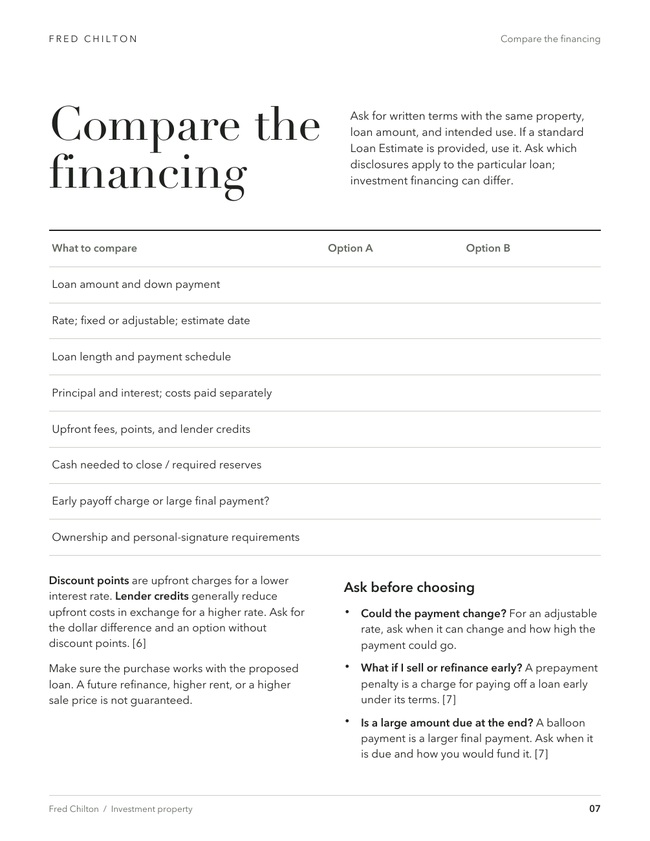
Compare the financingTwo options side by side, including required reserves, prepayment charges, a possible balloon payment, and who must sign personally.
- 08
Your one-page property briefPrice, intended use, supported rent and its source, planned cash left, cash after closing, your largest concern, and what still needs verification.